
Can an early childhood service be within ratio and still have inadequate supervision?
Can an educator be meaningfully engaged with a child while unintentionally creating a gap in supervision?
Can a beautifully designed learning environment compromise children's safety?
Throughout my years in early childhood education, I have come to recognise that active supervision is far more complex than simply being present, positioning ourselves correctly and counting children.
Effective active supervision requires us to understand the interconnected relationship between the educator, the child and the environment.

Finding the Balance Between Engagement and Awareness
As educators, we are encouraged to engage in sustained shared thinking, build meaningful relationships and become active participants in children's learning.
But how do we balance these pedagogical responsibilities with our supervision responsibilities?
When we become deeply engaged in a learning experience with a small group of children, what is happening beyond that interaction?
This is not about discouraging meaningful engagement. It is about developing the professional awareness necessary to support both meaningful learning and children's safety.
Inspiring Environments and Safe Exploration
Throughout November, our professional learning focus at STEPPING STONES has been Inspiring and Motivating Setups.
As we transition into our December focus on Active Supervision, I encourage educators to consider the relationship between these two areas of practice.
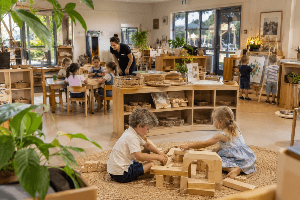
Our decisions about furniture placement, learning spaces, accessibility of resources and opportunities for independent exploration can influence our ability to supervise effectively.
An inspiring learning environment should provide opportunities for curiosity, investigation, independence and developmentally appropriate risk-taking.
However, are we equally intentional about considering how these environments support our supervision responsibilities?
Inspiring pedagogy and active supervision should complement one another rather than compete for our attention.
Creating a Shared Understanding
One of the challenges within our profession is that educators may have different understandings of what effective active supervision looks like.
These understandings can be influenced by previous experiences, professional knowledge, established routines and the expectations of the teams we have worked within.
We cannot assume that because everyone understands the importance of supervision, everyone approaches it in the same way.
Creating a culture of safety requires ongoing professional conversations, shared expectations and the confidence to question existing practices.
An Opportunity for Critical Reflection
At your next team meeting, consider exploring these questions:
- Are our supervision practices intentional or habitual?
- How do our pedagogical decisions influence our ability to supervise?
- Have we critically reflected on our learning environments through the lens of active supervision?
- Do all educators within our team share the same understanding of adequate supervision?
- Are we comfortable challenging practices that may compromise children's safety?
These conversations are not about finding fault. They are opportunities to strengthen our collective professional knowledge and accountability.
Moving Beyond Being Present
In November 2026, we updated our Active Supervision – Version Two workshop, strengthening the connections between pedagogy, legislative responsibilities, professional decision-making and everyday practice.
Through seven essential active supervision strategies, case study analysis and practical reflective scenarios, educators are encouraged to challenge their existing understandings and explore what effective supervision truly looks like.
At STEPPING STONES Professional Development, we believe professional learning should continually evolve alongside our profession.
As we move into December, I invite you to reflect on whether active supervision is something your team simply implements or something that is deeply understood and intentionally embedded within your pedagogy.
Being present is essential. Being intentionally present makes the difference.
Continue the Conversation
Explore our newly updated Active Supervision – Version Two, available through our Online Learning Hub and live team training opportunities.
Follow our social media pages throughout December to hear more of Janine's professional insights and engage in ongoing reflection.
Interested in accessing our Active Supervision Training?
Take advantage of our 10% training discount when booking your team's professional development.
Janine Kelly
Founder | STEPPING STONES Professional Development
Bachelor of Early Childhood Teaching
Author of The Connected Child