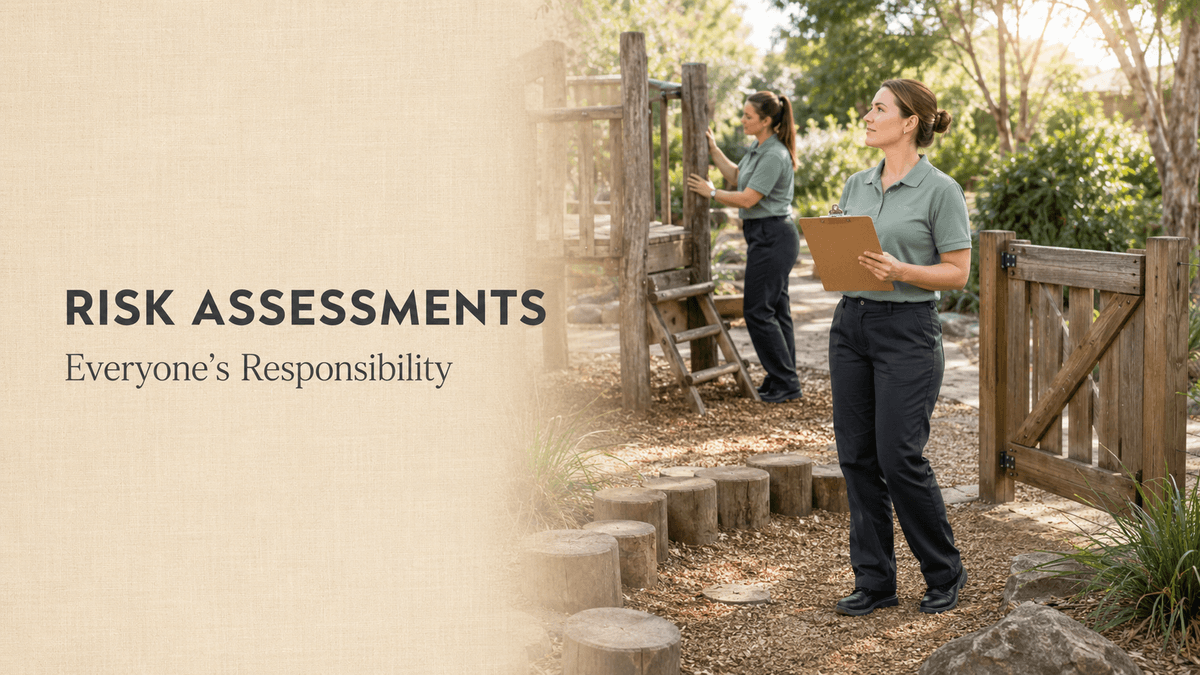
Risk assessment in early childhood is about more than completing a form.
It requires educators to notice hazards, consider who may be affected, evaluate the level of risk and take practical action to protect children’s safety and wellbeing.
2 Lessons |Online Workshop | Self-Paced
📝 Learn why risk assessments are essential to educators’ duty of care and how they support safer early childhood environments.

Practical Risk Assessment Training Grounded in Early Childhood Practice ritical
Janine brings:
🌿 More than 30 years of early childhood experience across Australia and Canada
🎓 A four-year Bachelor of Early Childhood Teaching degree
📝 Certificate IV in Training and Assessment
🏡 Practical experience identifying and managing risk across diverse early childhood environments
🤝 Experience contributing to risk assessments, service procedures, Quality Improvement Plans and Assessment and Rating processes
Drawing on decades of experience, Janine helps educators understand that risk assessment is not solely the responsibility of directors or nominated supervisors. Every educator has a role in noticing hazards, communicating concerns and taking appropriate action to protect children.
✓ Understand Your Duty of Care
Explore how identifying and responding to risk supports children’s safety and wellbeing.
✓ Recognise Formal and Informal Risk Assessments
Understand the difference between documented assessments and the ongoing risk decisions educators make throughout the day.
✓ Identify Hazards and Potential Harm
Strengthen your ability to notice hazards, consider who may be affected and anticipate what could happen.
✓ Assess Risk With Greater Confidence
Consider the likelihood and potential consequence of harm when evaluating risk.
✓ Take Practical Action
Explore how risks can be removed, reduced or managed through thoughtful and proportionate controls.
✓ Communicate as a Team
Recognise the importance of sharing information, documenting concerns and building a consistent approach across the service.
✓ Review and Improve
Understand why risk assessments must be revisited when circumstances, environments or practices change.
What Educators Are Saying ⭐⭐⭐⭐⭐
“The Risk Assessment workshop was presented very well and reinforced that risk assessment is a shared responsibility. A key takeaway was the importance of ensuring all educators read, understand and sign the relevant risk assessments. I will share this learning with my team to strengthen our practice.”
Buthina Alrabadi - Director, Busy Bees Long Day Care
“This training was informative, useful and very well presented. The explanations and examples of a Risk Management Plan were particularly valuable and easy to understand. I will use this learning to be more aware of potential risks and apply risk assessment practices within my daily work in an early childhood service.”
Regine - Graduating Diploma of Early Childhood Education and Care Student
“The course was clear, practical and easy to understand. Janine was friendly and professional, explaining each step at a comfortable pace. The practical examples helped me feel more confident in assessing everyday risks, making changes to support children’s safety and discussing concerns with my team.”
Waranya Thatong - Early Childhood Education and Care Student
Build confidence in identifying risks and completing meaningful risk assessments that support children’s safety and wellbeing.
Continue building your knowledge with lifetime access to the Professional Learning Library purchased.
Strengthen your team’s shared understanding of risk assessment, duty of care and safer everyday practice.
Email us today to discuss a service-wide professional learning session.