There is a quiet truth in early childhood education.
If we do not ground ourselves intentionally, the day will carry us away.
The pace is fast. The needs are constant. The emotional temperature fluctuates.
And somewhere in between snack routines, documentation, and conflict mediation, we forget to breathe.
Grounding is not indulgent.
It is professional sustainability.
The Myth of “Powering Through”
For many years in this profession, there was an unspoken badge of honour in being busy. In coping. In managing.
But coping is not the same as regulating.
And pushing through is not the same as being present.
Our nervous systems were never designed for constant activation.
When we ignore our internal signals we tighten our shoulders, have increased shallow breath, can become irritability, experience mental fog. And they do not disappear. They accumulate.
Does this resonate?
Did you know that grounding interrupts that accumulation.
Small Practices That Matter
Grounding does not require a yoga mat or an hour of silence.
It can look like:
• One minute of square breathing before opening the classroom door
• Feeling your feet on the ground during a difficult conversation
• Running cool water over your wrists at lunchtime
• Stepping outside for 60 seconds of fresh air
• Writing three sentences in a journal before driving home
Small rituals shift physiology.
Physiology shifts response.
Response shifts culture.
I personally find that water regulates me — a swim, even a float, slows everything down. Journaling helps organise the noise in my mind. Even walking across to the shops before cooking supper creates a reset between work and home.
These practices are not luxuries.
They are maintenance.
Grounded Educators Build Stable Spaces
When educators ground themselves:
- Team conflict decreases
- Patience increases
- Children settle more quickly
- Decision-making improves
- Burnout reduces
This is not just about self-care. It is about system care.
Environmental, social, and economic sustainability in early learning all rely on one thing, regulated humans.
For myself, I found square breathing was a perfect way to start becoming more grounded and it can be done anywhere at anytime.

Now you choose just one strategy.
Not ten.
Not a new program.
Not another expectation.
One steady practice that reminds your nervous system:
You are safe. You can slow down.
And watch what shifts.
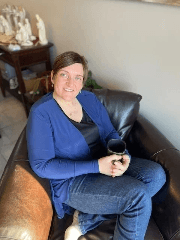
Janine Kelly